Payment
Why your charge card stops working at the border
Connector standards are the one genuinely settled thing in European charging. Payment is the opposite: a patchwork of bilateral agreements that nobody publishes clearly, and the single most common reason a well-planned journey goes wrong.
_Dresdner_Tor.jpg)
What roaming actually is
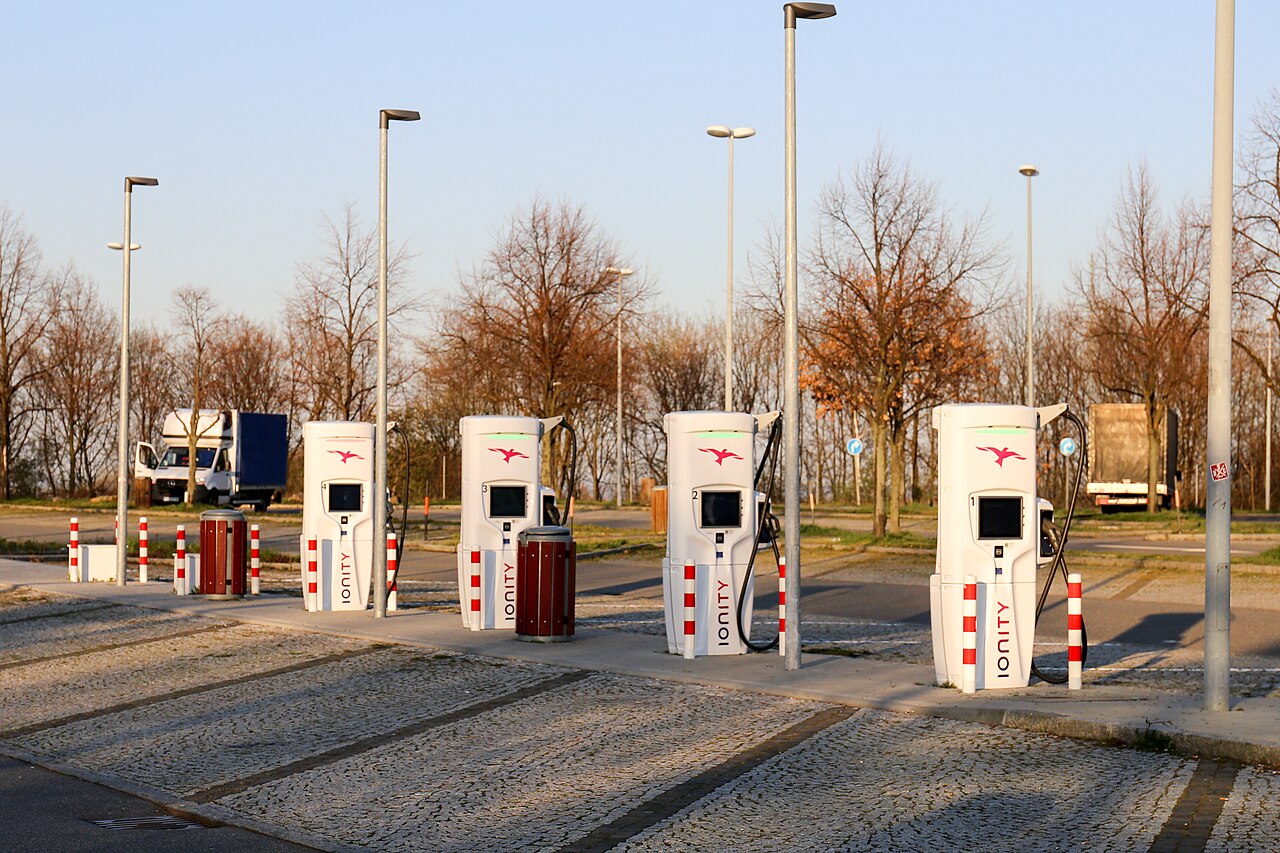
When you start a charge with a card or app that is not the operator's own, three parties are involved: the operator who owns the charger, your mobility service provider who issued the card, and usually a roaming hub that clears the transaction between them. If any link in that chain is missing for that specific operator, the card is refused — even though the hardware is identical to the one that worked yesterday [1].
This is why coverage is genuinely unpredictable. It is not that some countries are worse; it is that your provider's agreement set is different from your neighbour's, and neither is published as a route map.
What the regulation changed
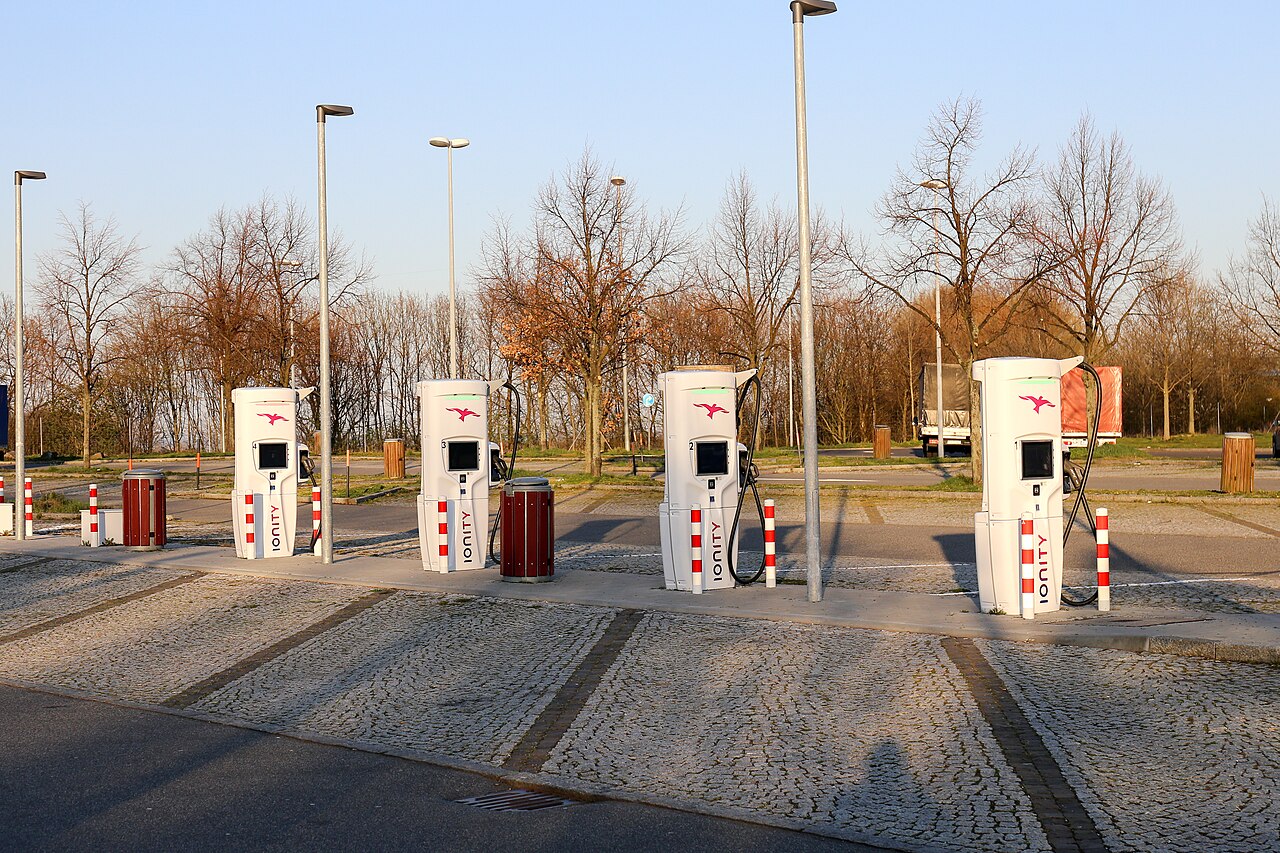
European rules now require newly installed rapid chargers to accept ad-hoc contactless card payment, which removes the dependency on any app or subscription for new hardware. This is a genuine improvement and it is worth knowing about, because it means a bank card is an increasingly viable fallback.
The caveat is the installed base. A charger commissioned before the requirement is not obliged to be retrofitted, and a great deal of the European estate predates it. Treat contactless as a likely fallback on new sites and an unlikely one on older ones.
_Dresdner_Tor.jpg)
Practical approach
- Hold two cards from providers with different roaming hubs. Most have no standing fee.
- Before a cross-border trip, check your provider's coverage for the operators on your actual route rather than for the countries.
- Keep a contactless bank card accessible — increasingly useful on new hardware.
- Register on the dominant national operator's own app for the country you are visiting; direct is always more reliable than roaming.
- Screenshot your provider's support number before you leave, because the moment you need it is the moment you have no signal.
Will my home charge card work abroad?
Do I need a different cable in another country?
Can I just use a bank card?
What if the charger rejects every card I have?
References
Every citation below links to the original peer-reviewed record on PubMed or via DOI. Nothing here is a substitute for medical advice.
-
Resilience of urban public electric vehicle charging infrastructure to flooding Raman G, Raman G, Peng J · Nature Communications · 2022 · Journal article DOI
-
Innovative Application of the Public–Private Partnership Model to the Electric Vehicle Charging Infrastructure in China Yang T, Long R, Li W, et al. · Sustainability · 2016 · Journal article DOI
-
<p>Plugging into Confidence: How Platform Interoperability Reshapes Electric Vehicle Charging Behavior and Charging Network Efficiency</p> Song P, Lakhiwal A, Park J, et al. · SSRN Electronic Journal · 2026 · Journal article DOI
-
User Experience of Public Electric Vehicle Charging Infrastructure in Shanghai: A Quantitative Analysis Xie X, Raval S, Deb S · World Electric Vehicle Journal · 2026 · Journal article DOI
-
Interpretable Station-Level Charging Congestion Pressure Assessment and Multi-Horizon Early Warning for Electric-Vehicle Charging Infrastructure Shi K · World Electric Vehicle Journal · 2026 · Journal article DOI
-
City-Scale Optimization of Public Electric Vehicle Charging Infrastructure: Spatio-Temporal Demand Forecasting, Graph Learning and Multi-Objective Siting Thango B, Ayetor G · World Electric Vehicle Journal · 2026 · Journal article DOI
-
Cost and Availability Optimization for Electric Vehicle Charging Infrastructure via Redundancy‐Spares‐Repair Integration Najdawi F, Fainman E, Jin T · Quality and Reliability Engineering International · 2025 · Journal article DOI
-
Optimal Planning for Public Charging Infrastructure by Behaviour‐Based Electric Vehicle Charging Demand Simulations and Geographic Information System Sirisumrannukul S, Prakobkaew P, Piamvilai N · IET Smart Grid · 2025 · Journal article DOI
-
New Tool to Screen Financial Viability of Alternative Public–Private Partnership Structures for Delivery of Electric Vehicle-Charging Infrastructure DeCorla-Souza P, Hossain M · World Electric Vehicle Journal · 2025 · Journal article DOI
-
Electric Vehicle Charging Station with UPI Payment Service Dange V · International Scientific Journal of Engineering and Management · 2025 · Journal article DOI
-
OCPP Interoperability: A Unified Future of Charging Kirchner S · World Electric Vehicle Journal · 2024 · Journal article DOI
-
Interoperability of the Electric Vehicle Charging Ecosystem Vedula R · Premier Journal of Science · 2024 · Journal article DOI
-
Advancements in Electric Vehicle Charging Infrastructure: Fast Charging, Wireless Charging, and Smart Grid Integration Jordan Y. Arpilleda · International Journal of Advanced Research in Science, Communication and Technology · 2023 · Journal article DOI
-
Electric Vehicle Public Charging Infrastructure Planning Using Real-World Charging Data Mortimer B, Hecht C, Goldbeck R, et al. · World Electric Vehicle Journal · 2022 · Journal article DOI